Slow Cooker Baby Back Ribs
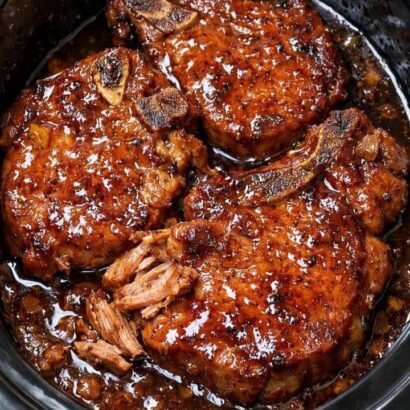
Baby back ribs cooked in a slow cooker are one of the most convincing arguments for the appliance’s value: a cut of meat that traditionally requires three to five hours of low-and-slow smoke cooking, or at minimum several hours of oven work with careful temperature management, emerges from the slow cooker after seven to eight hours on LOW as tender as the best barbecue restaurant versions, with the meat pulling cleanly from the bone and the sauce — a combination of bottled barbecue sauce, ketchup, brown sugar, and Worcestershire — caramelized into a dark, slightly sticky glaze around each section. No smoker needed, no babysitting, no temperature checks every thirty minutes. Set up in the morning and dinner is done.
What makes baby back ribs work particularly well in the slow cooker is their anatomy. Baby backs are cut from the upper portion of the pork rib cage where the ribs meet the spine, and they are leaner and shorter than spare ribs. The connective tissue in baby back ribs — particularly around the cartilage at the ends of each rib — breaks down into gelatin during the long, moist, low-temperature braise of the slow cooker cook, which is exactly the transformation that produces the tender, pull-from-the-bone texture that makes properly cooked ribs so satisfying. The slow cooker’s enclosed, moist environment accomplishes this connective tissue breakdown as effectively as a smoker does, with the only tradeoff being the absence of the smoky bark and caramelized exterior that direct heat produces. The optional broiler finish addresses this tradeoff directly.
The Role of Each Sauce Ingredient
The sauce in this recipe — bottled barbecue sauce, ketchup, brown sugar, and Worcestershire sauce — is a four-ingredient combination that produces something more complex and more interesting than any of the four components alone. Understanding what each contributes clarifies both why the combination works and how to adjust it toward personal preference.
Bottled barbecue sauce provides the foundational flavor: smoke, tomato, sweetness, and a specific spice blend that varies by brand but typically includes onion, garlic, paprika, and often a vinegar note. This is the sauce’s dominant flavor character, and the brand chosen will most influence the finished dish. Ketchup is not merely redundant with the barbecue sauce — it adds additional concentrated tomato flavor and acidity that makes the sauce brighter and more fruit-forward, and its consistency contributes to the sauce’s gloss. Brown sugar adds sweetness that is distinct from the barbecue sauce’s sweetness because of its molasses content — the molasses contributes a caramel depth and the sugars available for caramelization are what produce the glossy, slightly sticky glaze quality of the finished sauce. Worcestershire sauce adds the savory, umami depth that is its primary contribution in any application — the fermented fish sauce, molasses, tamarind, and vinegar combination in Worcestershire produces a flavor complexity that deepens the savory character of the sauce without any of its individual components being identifiable in the finished result.
Why You’ll Love This Recipe
Five ingredients, ten minutes of setup, seven to eight hours of completely unattended cooking, and an optional five-minute broiler finish produce slow-cooked baby back ribs that are fall-off-the-bone tender, fully sauced, and genuinely impressive. The broiler step — transferring the cooked ribs to a baking sheet, brushing with additional sauce, and broiling for three to five minutes — is what makes the finished ribs look and taste like properly finished barbecue rather than slow-cooked ribs. That step is optional but strongly recommended for any occasion where presentation matters. For a busy weekday dinner with minimal morning prep, the ribs from the slow cooker without the broiler step are entirely satisfying on their own.
Ingredient Notes
Baby back ribs — three to four pounds, membrane removed — are the cut. “Baby back” refers to the shorter ribs from the upper rib cage, not to the age of the pig; they are meatier per bone than spare ribs and cook more evenly in the slow cooker’s enclosed environment. The membrane on the bone side of the rack — the thin, translucent silver skin that covers the concave surface — should be removed before cooking. It doesn’t soften adequately during the slow cook and creates a tough, chewy layer between the meat and the bone that makes the ribs less pleasant to eat. Removing it is straightforward: slide a butter knife under the edge, grip the flap with a paper towel for traction, and pull it away in one piece. Cut the rack into three- or four-rib sections to fit in the slow cooker — a full rack of baby backs is typically 1.5 to 2 feet long and won’t fit flat in any standard slow cooker insert.
Bottled barbecue sauce — one and a half cups — is the primary flavor base. A sauce with good depth, a reasonable balance of sweet and savory, and some smoke character produces the best finished ribs. Kansas City-style sauces (tomato-based, moderately sweet, with vinegar balance and smoke) are the most universally compatible with this preparation. Sweet Baby Ray’s, KC Masterpiece, Stubb’s Original, and Bull’s-Eye all work well. The ketchup, brown sugar, and Worcestershire additions will modify the sauce’s character somewhat, but the bottled sauce’s inherent flavor profile is the dominant element.
Ketchup — half a cup — adds bright tomato acidity and additional body to the sauce. It prevents the barbecue sauce and brown sugar combination from being too cloying and adds the slight tartness that makes the sauce more vibrant. Do not substitute tomato paste — it is more concentrated and less sweet than ketchup and produces a different balance in the finished sauce.
Brown sugar — one-quarter cup, packed — provides sweetness and caramelization potential. The brown sugar is what produces the glossy, slightly sticky glaze quality of the finished sauce during the optional broiler step, as the sugar caramelizes rapidly under the broiler’s heat. Dark brown sugar produces a deeper, more molasses-forward character; light brown sugar is milder. Either is appropriate; dark brown is preferred for the most complex flavor result.
Worcestershire sauce — two tablespoons — adds savory depth and complexity throughout the sauce. Two tablespoons is a noticeable but not assertive amount — the Worcestershire should deepen the sauce’s savory character without its own flavor being identifiable. It is the ingredient that makes the sauce taste like something was deliberately built rather than simply combined.
Ingredients
- 3 to 4 lbs baby back ribs, membrane removed
- 1½ cups bottled barbecue sauce
- ½ cup ketchup
- ¼ cup packed brown sugar
- 2 tbsp Worcestershire sauce
Step-by-Step Instructions
Step 1 — Prepare the Ribs
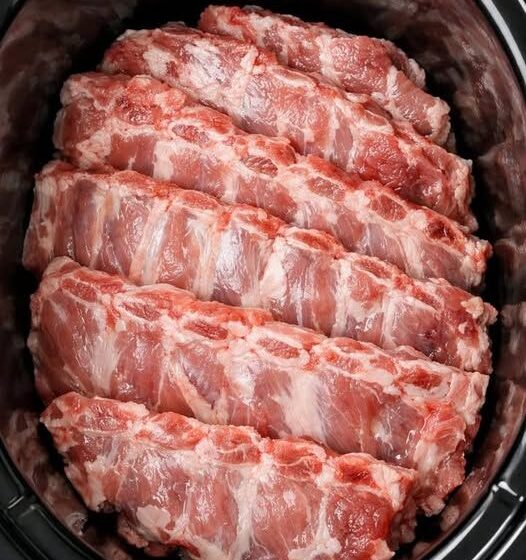
Lay the rack of baby back ribs meat-side down on a cutting board. Locate the thin membrane on the concave bone side — it looks like a slightly translucent silver skin stretched across the bones. Slide the tip of a butter knife under the membrane at one end, lift it away from the bone, grip it with a paper towel, and pull steadily to remove it in one piece. Cut the rack into three- or four-rib sections using a sharp knife between the rib bones. The sections should be small enough to fit in the slow cooker with the meat side facing out (curved toward the insert walls) and the bones pointing toward the center — this orientation maximizes the meat’s surface contact with the sauce.
Step 2 — Make the Sauce
In a medium bowl, stir together the barbecue sauce, ketchup, brown sugar, and Worcestershire sauce until the brown sugar is mostly dissolved and the mixture is smooth and glossy. Taste the sauce and adjust if needed — a slightly more tangy preference can be addressed with a tablespoon of apple cider vinegar; a preference for more heat with a teaspoon of hot sauce or red pepper flakes. The sauce should taste balanced and assertive — it will mellow slightly during the long braise and any imbalances present in the raw sauce will remain in the finished dish.
Step 3 — Arrange and Sauce the Ribs
Stand the rib sections upright in the slow cooker insert with the meaty side facing out toward the insert walls and the bones pointing toward the center — this is the most space-efficient and most effective orientation for a full batch of ribs. If the sections don’t stand upright easily, lay them slightly overlapping in the insert. Pour the sauce evenly over the ribs, using tongs to lift sections and allow sauce to run underneath and around all surfaces. Every section should have sauce contact.
Step 4 — Cook
Cover and cook on LOW for 7 to 8 hours or on HIGH for 3½ to 4 hours. LOW is strongly preferred — the longer, gentler cook produces more thoroughly dissolved connective tissue, more uniformly tender meat throughout the rack, and a more richly developed sauce. The ribs are done when the meat has clearly pulled away from the bone ends, the sauce is bubbling and darkened, and a rib section can be lifted without the meat falling off (it should be very tender but still cohesive). If the meat is falling apart entirely, it’s cooked slightly past the optimal point for presentation, though the flavor is unaffected.
Step 5 — Optional Broiler Finish
Preheat the oven broiler to HIGH and line a rimmed baking sheet with aluminum foil. Carefully transfer the cooked rib sections from the slow cooker to the prepared baking sheet using tongs and a wide spatula for support — the ribs are very tender and may want to fall apart at the ends. Brush the remaining sauce from the slow cooker generously over the top and sides of each section. Broil 4 to 6 inches from the heating element for 3 to 5 minutes, watching closely, until the sauce caramelizes, darkens, and the exposed rib edges develop slight char. Remove immediately when the sauce looks glossy and lightly charred at the edges. Transfer to a serving platter.
Step 6 — Sauce and Serve
Skim excess fat from the surface of the sauce remaining in the slow cooker insert. If the sauce is thin, pour it into a small saucepan and simmer over medium heat for 5 to 10 minutes until it reduces to a slightly thicker, more coating consistency. Spoon or brush the warm sauce over the plated ribs before bringing to the table, and serve the remaining sauce alongside for anyone who wants more. Serve with plenty of napkins.
Tips for the Best Results
Remove the membrane. This is the prep step most often skipped and most worth doing. The membrane stays tough and chewy through the entire long cook and creates an unpleasant barrier between the meat and the bone on every rib. Removing it takes one to two minutes and makes a clear, noticeable difference in the eating experience. A paper towel for grip is the essential tool.
Cook on LOW for the most tender result. Baby back ribs cooked on HIGH are tender, but the connective tissue breakdown is less complete than it is after 7 to 8 hours on LOW. The ribs cooked on LOW are more uniformly tender throughout, including at the thick ends where the cartilage is most dense. If the schedule forces HIGH, plan on the longer end of the HIGH range (4 hours rather than 3½).
Don’t skip the broiler finish for presentation occasions. The broiler step transforms slow-cooker ribs from tender, sauced ribs into something with the caramelized, slightly charred exterior character of properly finished barbecue. Five minutes of attention under the broiler makes the finished ribs look like they came from a serious barbecue operation rather than a countertop appliance. Strongly recommended for any occasion where the ribs are being served to guests.
Watch the broiler constantly. The brown sugar in the sauce caramelizes rapidly under broiler heat. The window between properly caramelized and burned is narrow — check every sixty seconds and remove when the sauce looks glossy and the edges are beginning to char. Burned sugar produces a bitter flavor that is difficult to salvage.
Choose a barbecue sauce you genuinely enjoy. The bottled barbecue sauce is the dominant flavor note in the finished dish. A sauce whose flavor you find too sweet, too vinegary, or too thin will produce ribs with those same qualities amplified. Taste the sauce before using it and select one whose character you want in the finished ribs.
Frequently Asked Questions
Can I use spare ribs instead of baby back ribs?
Yes. Spare ribs are cut from lower on the rib cage and are larger, fattier, and less uniform in shape than baby backs. They take slightly longer to cook — 8 to 9 hours on LOW for the most thorough connective tissue breakdown — and produce a richer, more robustly flavored result from their higher fat content. St. Louis-cut spare ribs (trimmed to a more rectangular shape) fit more neatly into a slow cooker than untrimmed spare ribs. The same sauce and method apply to either cut.
Can I add a dry rub before slow cooking?
Yes — and it’s an excellent optional addition that adds significant flavor depth without complicating the method. A simple mixture of one tablespoon each of smoked paprika, brown sugar, onion powder, and garlic powder, plus one teaspoon each of salt, black pepper, and cumin, rubbed over both sides of the rib sections before they go into the slow cooker, adds a spice layer under the barbecue sauce that gives the finished ribs more complexity. The rub can be applied immediately before cooking or up to 24 hours ahead and refrigerated for deeper flavor penetration.
Do the ribs need liquid added beyond the sauce?
No — the sauce mixture provides sufficient moisture for the ribs to cook through without additional liquid. Adding water or broth would dilute the sauce significantly and produce a thinner, less concentrated finished sauce. The ribs also release their own juices during the cook, which contribute to the sauce volume. The sauce in the slow cooker at the end of the cook will be noticeably more abundant and more liquid than what was poured in at the start.
Can I make these ahead for a party?
Yes. Cook completely, allow to cool, and refrigerate the ribs in the sauce for up to two days. Reheat in a 300°F oven covered with foil for 20 to 25 minutes, then do the broiler finish as directed. The ribs’ flavor is fully preserved through this process and the make-ahead approach is particularly useful for parties where managing multiple dishes at serving time is challenging. The sauce may solidify slightly during refrigeration from the gelatin released by the ribs — this is correct and indicates a properly made, collagen-rich braising sauce; it will return to liquid when reheated.
How do I know the ribs are done?
Two reliable indicators: the meat has clearly pulled away from the bone ends by at least a quarter inch, exposing the bone below the meat line; and a rib section can be lifted with tongs and the meat bends and begins to crack at the surface under its own weight but doesn’t fall off the bone completely. A third check: pressing the meat lightly with tongs should feel like pressing firm butter — soft and yielding with no resistance. Internal temperature (145°F for food safety, though for tenderness the ribs will be well above this by the time the connective tissue has fully broken down) is the food safety check.
Variations Worth Trying
Spicy honey BBQ version: Replace the brown sugar with two tablespoons of honey and add one teaspoon of crushed red pepper flakes to the sauce mixture. The honey produces a slightly different, slightly floral sweetness compared to brown sugar and contributes to the glaze in a subtly different way during the broiler finish; the red pepper flakes add a building heat that contrasts with the honey’s sweetness in the classic sweet-heat barbecue tradition.
Asian-inspired version: Replace the ketchup with hoisin sauce, the Worcestershire with soy sauce, and add a teaspoon of freshly grated ginger and two minced garlic cloves to the sauce. Use a plain or lightly seasoned barbecue sauce as the base rather than a specifically American-style BBQ sauce. The hoisin, soy, and ginger combination produces ribs with a sweet, umami-rich, slightly fermented character that is distinctly different from the classic American barbecue profile while using the same method and cooking time.
Apple cider and mustard version: Add two tablespoons of apple cider vinegar and one tablespoon of Dijon mustard to the sauce mixture. Reduce the brown sugar to two tablespoons. The vinegar sharpens the sauce and gives it a more tangy, complex character; the Dijon adds a subtle sharpness that deepens the sauce’s savory complexity. This version is less sweet than the base recipe and more appropriate for people who find standard barbecue sauce too cloying.
Brown sugar and bourbon version: Add two tablespoons of bourbon to the sauce mixture. The bourbon’s vanilla and caramel notes deepen the sauce’s complexity considerably and the alcohol cooks off entirely during the long braise, leaving only its flavor compounds in the finished sauce. This version has a decidedly more adult, more deeply flavored character and is particularly suitable for the broiler finish where the bourbon’s sugars caramelize alongside the brown sugar.
Dry rub and minimal sauce version: Rub the rib sections with the dry rub described in the FAQ above, allow to sit for at least thirty minutes, then add to the slow cooker with only one cup of barbecue sauce rather than the full sauce mixture. The reduced sauce keeps the ribs moist during the braise but allows the dry rub’s seasoning to remain the primary flavor statement. Finish the ribs with the broiler, brushing a small additional amount of sauce over the surface just before broiling for the caramelized surface. This version produces ribs with a more identifiable spice character and less sauce-forward flavor than the base recipe.
Serving Suggestions
Slow cooker baby back ribs are most naturally served with the classic American barbecue accompaniments: creamy coleslaw (whose acidity and crunch provide excellent contrast to the rich, sweet ribs), corn on the cob, baked beans, and either mashed potatoes or buttered egg noodles for absorbing the extra sauce. Warm dinner rolls or cornbread are traditional for mopping up the sauce from the platter. For a casual setting, bring the slow cooker to the table on a trivet set to WARM and let everyone help themselves, which is both the most relaxed and the most practical presentation approach. For a more composed presentation, arrange the broiler-finished rib sections on a large platter with the sauce spooned over, garnished with a scatter of chopped fresh parsley or thinly sliced green onions, which adds color contrast against the dark glaze.
Storage
Store leftover ribs in the sauce in an airtight container in the refrigerator for up to three to four days. The ribs’ gelatin will cause the sauce to set into a solid or semi-solid state when cold — this is a quality indicator rather than a defect. Reheat covered in a 300°F oven for 15 to 20 minutes until warmed through, adding a tablespoon of water if the sauce has not loosened sufficiently. Alternatively, reheat in a covered skillet over medium-low heat with a small amount of water added to loosen the sauce. Leftover rib meat pulled from the bone and mixed with the remaining sauce makes an excellent sandwich filling for the following day, served on toasted rolls with additional sauce and coleslaw.
Five Ingredients, One Properly Tender Rack
Slow Cooker Baby Back Ribs deliver a result that convincingly demonstrates the slow cooker’s most underappreciated capability: the ability to produce genuinely impressive, properly cooked ribs from an entirely hands-off, morning-setup process. The sauce — four common pantry ingredients combined into something more complex than its components — caramelizes against the ribs during the seven-to-eight-hour braise into a dark, glossy coating; the connective tissue in the baby backs breaks down completely into the tender, pull-from-the-bone texture that makes properly cooked ribs worth eating; and the optional broiler finish brings the caramelized exterior that is the visual signature of barbecue done right. Five ingredients, almost no active time, and a result that earns a permanent place in the weeknight rotation.
Enjoy!