The BEST 4-Ingredient Baked Colcannon Casserole (Irish Comfort Food Masterclass)
Traditional Irish colcannon is a masterpiece of rustic culinary simplicity—a harmonious blend of creamy mashed potatoes and tender cabbage. However, by taking this standard stovetop classic and transferring it into a high-heat oven, we transform a simple side dish into a spectacular, golden-crusted casserole.
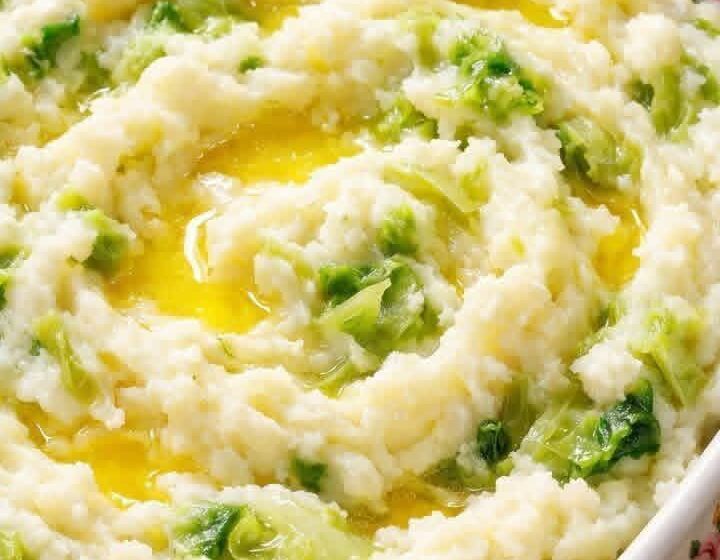
When you are looking for an incredibly comforting, budget-friendly side dish that requires minimal effort, this 4-ingredient bake is an absolute powerhouse. The magic lies in the structural contrast: the interior remains flawlessly silky and rich, while the oven’s heat creates caramelized, crispy edges and pools of browned butter across the swirled surface.
Whether you are serving it alongside a hearty Sunday roast, a savory meatloaf, or just enjoying a cozy bowl on a chilly evening, this foolproof method guarantees perfect results. Let’s head into the kitchen and break down the food science behind this brilliant Irish staple!
The Culinary Science: Why This Method Works
- The Steam-Off Phase: One of the biggest mistakes in making mashed potatoes is leaving them waterlogged. By letting the drained potatoes sit in the warm pot for two minutes before mashing, the excess surface water evaporates as steam. This prevents the starches from turning into a heavy, gluey paste.
- Lipid-Starch Emulsification: Why must the milk and butter be warmed in Step 4? If you introduce cold dairy to hot potatoes, it shocks the starches and immediately cools the dish down, resulting in a gummy texture. Warm dairy seamlessly emulsifies with the potato starches, yielding an incredibly fluffy, cloud-like mash.
- Residual Heat Cooking: Instead of boiling or sautéing the cabbage separately (which can make it mushy and waterlogged), this recipe relies on residual thermal heat. Folding the finely shredded raw cabbage directly into the piping-hot potatoes gently softens the greens while maintaining a slight, pleasant textural bite.
The Ingredient Formula
With a recipe this simple, the quality of your ingredients is everything. Here are the exact measurements you will need:
- 3 pounds potatoes (Russet or Yukon Gold), peeled and cut into uniform chunks
- 4 cups green cabbage (about 1 small head or half a large one), finely shredded
- 1 cup whole milk (plus a splash more if needed for texture)
- 8 tablespoons salted butter, divided (6 tbsp for the mash, 2 tbsp for dotting)
Technical Execution & Assembly
- Preheat and Prep: Preheat your oven to 375°F (190°C). Lightly butter a medium ceramic casserole dish to prevent sticking and encourage the edges to brown beautifully.
- Boil the Potatoes: Place the peeled, chunked potatoes in a large heavy-bottomed pot and cover them with cold water by about an inch. Add a generous pinch of salt. Bring to a boil over medium-high heat, then reduce to a gentle simmer and cook until the potatoes are very tender when pierced with a fork (about 15–20 minutes).
- Shred the Cabbage: While the potatoes simmer, grab a sharp chef’s knife and finely shred the green cabbage. Aim for paper-thin ribbons so it seamlessly integrates into the mash and turns tender quickly.
- Warm the Dairy: In a small saucepan or a microwave-safe measuring cup, gently warm the 1 cup of whole milk with 4 tablespoons of the butter. Heat until the butter is mostly melted and the milk is hot, but do not let it reach a rolling boil.
- The Steam-Off: Drain the cooked potatoes thoroughly in a colander and immediately return them to the warm, empty pot. Let them sit undisturbed for 1 to 2 minutes so the excess steam can escape.
- The Mash: Pour about three-quarters of the warm milk-and-butter mixture over the potatoes. Mash vigorously with a potato masher until smooth and creamy. Gradually add the remaining milk mixture until you reach a soft, spreadable consistency. Taste and adjust with salt if necessary.
- The Fold: Stir the finely shredded cabbage directly into the hot mashed potatoes. Mix just until the cabbage is evenly distributed, leaving beautiful, visible streaks of green.
- Assemble and Dot: Spoon the colcannon mixture into the prepared casserole dish. Use the back of a spoon to create gentle swirls and deep divots across the surface. Cut the remaining 4 tablespoons of butter into small pieces and dot them all over the top, tucking several pieces directly into the divots you created.
- The Bake: Bake in the preheated oven for 20–25 minutes. You are looking for the edges to turn lightly golden, the top to brown in elevated spots, and the butter to melt into shiny, bubbling puddles.
- Rest and Serve: Remove from the oven and let the casserole rest for 5 minutes before serving to allow the structure to set.
Expert Test-Kitchen Tips for Flawless Results
To elevate this humble 4-ingredient dish into a flawless, professional-quality side, keep these essential kitchen rules in mind:
- Potato Selection: Russet potatoes are high in starch and will yield the absolute fluffiest, lightest mash. Yukon Golds possess a medium starch content and a naturally buttery flavor, resulting in a slightly denser, creamier texture. Avoid waxy red potatoes, as they will turn gummy when mashed!
- Start in Cold Water: Always start your potatoes in cold water. If you drop raw potatoes into boiling water, the exterior will turn to mush before the interior is fully cooked. Starting cold ensures an even, consistent temperature rise.
- The Swirl Technique: Do not smooth the top of the casserole completely flat before baking. The dips and peaks created by the back of your spoon (Step 8) are crucial—they provide surface area for the Maillard reaction (browning) and create perfect little reservoirs to trap the melting butter.
Creative Variations & Repurposing Leftovers
This highly adaptable recipe is a fantastic blank canvas. Try these test-kitchen approved upgrades:
- The Allium Upgrade: For a pop of color and a mild, sharp bite, fold a small handful of very finely sliced green onions (scallions) into the mash along with the cabbage.
- Texture Adjustments: If you prefer a much looser, almost puree-like consistency, simply whisk in an extra splash of hot milk during the mashing phase.
- Make-Ahead Strategy: Assemble the entire casserole in the dish, cover tightly, and refrigerate. When ready to eat, let it sit at room temperature for 30 minutes, then bake. (Note: You may need to add 10 extra minutes to the baking time to ensure it is hot and bubbling all the way through!)
- Leftover Potato Cakes: Do not throw away leftovers! The next morning, form the chilled colcannon into small, compact patties. Pan-fry them in a skillet with a tablespoon of butter over medium heat until a deeply browned, crispy crust forms on both sides. Serve with fried eggs for an unbelievable breakfast!