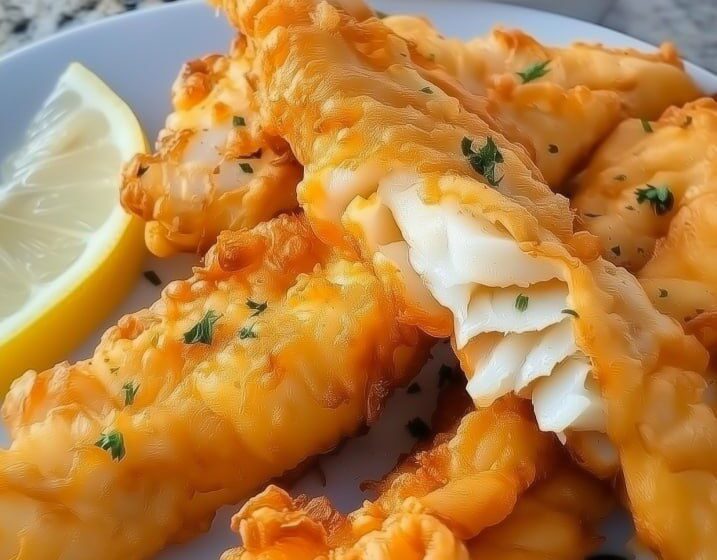
If you have ever bitten into a piece of Long John Silver’s fried fish or chicken, you instantly recognize that iconic texture: an impossibly light, shatteringly crisp, golden-brown shell that clings perfectly to the protein inside. Recreating this fast-food legend at home might seem daunting, but the secret lies entirely in the chemistry of the batter.
When you want to elevate your weekend fish fry, skipping the heavy, dense commercial breading and engineering a proper wet batter is the only way to go. This recipe utilizes a highly specific blend of chemical leaveners, a touch of cornmeal for structural integrity, and the brilliant addition of carbonated ginger ale to create a perfectly aerated crust.
Whether you are frying up fresh cod fillets or engineering the ultimate crispy chicken tenders, this master recipe delivers massive, nostalgic flavor with absolute test-kitchen precision. Let’s fire up the oil and break down the mechanics of the perfect fry!
The Science of the Batter: Why This Works
- The Carbonation Hack: Using ginger ale is a brilliant culinary trick. The carbon dioxide bubbles in the soda rapidly expand when they hit the hot oil, creating thousands of microscopic air pockets in the crust. This ensures the batter fries up incredibly light and crispy rather than dense and heavy.
- Dual Leavening Agents: Utilizing both baking powder and baking soda provides an aggressive lift. The baking soda reacts instantly with the slight acidity of the ginger ale, while the baking powder provides a secondary expansion as the temperature rises in the fryer.
- The Cornmeal Crunch: Adding exactly 4 tablespoons of yellow cornmeal disrupts the gluten network of the all-purpose flour, preventing the batter from becoming tough and adding that signature, slightly gritty crunch that defines the Long John Silver’s experience.
- Sugar for Browning: The natural sugars in the ginger ale accelerate the Maillard reaction, ensuring your fish develops that beautiful, deep golden-brown color before the delicate protein inside overcooks.
The Ingredient Formula
For precise, restaurant-quality results, here are the exact measurements you will need:
- 6 fish fillets (Cod, Pollock, or Haddock work best. You can easily substitute with chicken strips!)
- 1 ½ cups all-purpose flour
- 4 tablespoons yellow cornmeal
- ½ teaspoon baking soda
- ½ teaspoon baking powder
- ½ teaspoon salt
- 1 ½ cups ginger ale, cold
- Vegetable or canola oil, for frying
Technical Execution & Frying Method
- Whisk the Dry Ingredients: In a medium mixing bowl, combine the all-purpose flour, yellow cornmeal, baking soda, baking powder, and salt. Whisk vigorously to ensure the leavening agents are evenly distributed throughout the flour.
- The Wet Hydration: Slowly pour the cold ginger ale into the dry ingredients while whisking constantly. Continue until the batter is smooth and free of major dry lumps. The batter should be slightly thick but still easily pourable—similar to pancake batter. (Do not overmix, or you will develop the gluten and create a tough crust!)
- Bring the Oil to Temp: Heat a heavy-bottomed Dutch oven or deep-sided skillet filled with several inches of vegetable or canola oil. Bring the temperature to exactly 350°F (175°C) using a deep-fry thermometer. Ensure the oil is deep enough for the fillets to float freely.
- The Dredge: Working one at a time, submerge each fish or chicken fillet completely into the batter. Lift the protein and let any thick, excess batter drip off for a few seconds.
- The Fry: Carefully carefully lower the battered fillets away from you into the hot oil. Work in small batches to avoid crowding the pan. Fry for 4–6 minutes per side, or until a deep golden brown. Fish should flake easily with a fork; chicken must reach an internal temperature of 165°F (74°C).
- Drain and Serve: Remove the fillets from the oil using a spider skimmer or slotted spoon. Transfer them to a wire cooling rack set over a baking sheet (or a paper towel-lined plate) to drain excess oil. Serve piping hot with tartar sauce, malt vinegar, or fresh lemon wedges!
Expert Test-Kitchen Tips for Flawless Frying
To ensure your homemade batter achieves maximum crispiness without turning into a greasy sponge, follow these professional frying rules:
- Keep the Soda Cold: Use ice-cold ginger ale right out of the refrigerator. Cold batter hitting hot oil creates a temperature shock that prevents the flour from absorbing excess grease, resulting in a much crunchier shell!
- Maintain the Thermodynamics: Frying is a game of temperature control. When you drop cold, battered fish into 350°F oil, the temperature will drop rapidly. Never overcrowd the pot. If the oil drops below 325°F, your batter will absorb the oil and become soggy. Let the oil recover to 350°F between batches.
- Dry Your Protein: Before dipping your fish or chicken into the wet batter, pat it completely dry with paper towels. If the surface of the meat is wet, the batter will slide right off in the fryer, leaving you with bare patches.
- The Wire Rack Advantage: Resting fried foods on paper towels can trap steam underneath the food, ruining your perfectly crispy crust. Always drain your fried fish on a wire cooling rack so air can circulate around the entire fillet!