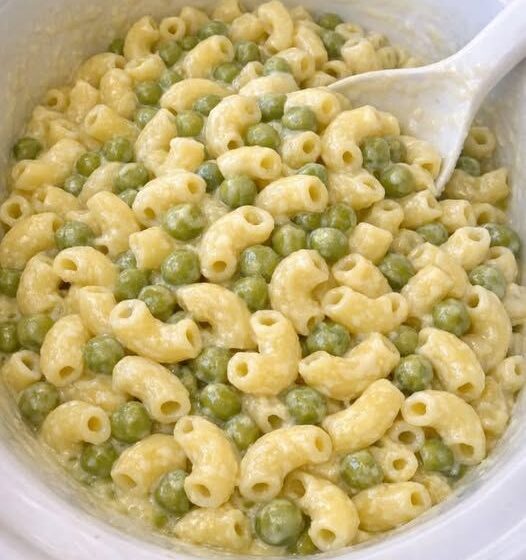
Elbow macaroni, canned peas with their liquid, water, and butter. Four ingredients, one slow cooker, and ninety minutes produce a dish that occupies its own particular category in the American comfort food tradition — the kind of preparation that emerged not from a recipe book but from the practical arithmetic of a Midwestern kitchen where the pantry contained these four things and dinner needed to happen. The pasta hydrates in the combined liquid of the pea brine and water, absorbing the peas’ gentle sweetness as it softens. The butter melts over the surface and works its way through the pasta and peas during the cook. The peas break apart at the edges as everything cooks, their starch blending with the pasta’s released starch and the pea brine into a pale green, glossy, softly coating sauce that clings to every elbow when the pot is stirred. The result is modest in description and genuinely satisfying in the bowl — warm, slightly sweet, buttery, and complete in the way that only very simple food can be.
The use of canned peas rather than frozen is important to this recipe’s specific character and worth understanding. Canned peas are fully cooked and softened in the can, and their brine — the liquid they’re packed in — is mildly seasoned with salt and carries the peas’ flavor throughout. When the peas and their brine go into the slow cooker undrained, they contribute both their soft texture and that flavored liquid to the cooking environment. Frozen peas, by contrast, are firmer and their water content produces a less flavored cooking liquid. The canned pea brine is part of the recipe’s sauce, not a waste product to be discarded, and it is what gives the finished dish its characteristic pale green tint and gently pea-forward flavor throughout every element rather than only where the peas themselves are present.
The Tradition Behind This Dish
Macaroni and peas — pasta e piselli — appears in the Italian culinary tradition as a brothy, simple pasta dish made with fresh or dried peas, olive oil or lard, and occasionally cured pork. The Italian-American adaptation, arriving in the American Midwest through immigrant communities in the early twentieth century, simplified further toward whatever was available: canned peas replaced fresh or dried, butter replaced olive oil, and the preparation found its natural home in the budget cooking of Depression-era and postwar households where four pantry ingredients produced dinner for a family. The slow cooker version is a natural extension of this tradition — the same principles of gentle heat, simple ingredients, and patience producing something more unified and more flavorful than a quick stovetop version of the same dish.
The dish belongs to the broader category of pasta e legumi — pasta with legumes — that encompasses dozens of Italian and Italian-American variations (pasta with beans, pasta with chickpeas, pasta with lentils) all built on the same principle: pasta cooked directly in the legume’s liquid, absorbing its flavor and starch throughout rather than being boiled separately in plain water and sauced afterward. This is why pasta cooked in the pea brine tastes different from pasta cooked in water and tossed with drained peas — the starch exchange during the cook produces something more integrated, more cohesive, and more uniformly flavored throughout every piece.
Why You’ll Love This Recipe
This is one of the most economical hot meals available from a slow cooker. The ingredient cost for four generous servings is minimal. The preparation takes under five minutes. The slow cooker runs mostly unattended for ninety minutes. The finished dish is warm, filling, and genuinely comforting in the specific, understated way that honest budget cooking has always been. For households managing tight grocery budgets, it is a reliable and deeply satisfying solution. For any household, it is the kind of dish that earns a place in the regular rotation precisely because it asks so little and delivers something real.
Ingredient Notes
Dry elbow macaroni — two cups — goes in dry and cooks directly in the pea liquid and water. The small, curved elbow is the traditional and most appropriate shape for this preparation: its size is proportional to the peas so each spoonful has a natural balance of pasta and pea, and its hollow interior catches and holds the thin, buttery pea sauce effectively. Two cups of dry macaroni for the combined liquid of two 15-ounce cans of peas and two cups of water is calibrated to produce a properly sauced result — the pasta absorbs most of the liquid, leaving enough residual liquid to coat every piece without pooling. The HIGH setting is required; LOW does not produce sufficient heat for this thick, starchy mixture to cook the pasta evenly throughout.
Canned peas — two 15-ounce cans, undrained — are the vegetable, the flavoring, and the primary cooking liquid. The brine from the cans is not a byproduct to pour away — it is the seasoned liquid that makes this dish taste more developed than plain pasta cooked in water. Low-sodium canned peas produce a less salty result that may need salt adjusted upward at the end; standard canned peas produce a well-seasoned result with minimal additional salt needed. Any brand of standard canned green peas works identically.
Unsalted butter — half a cup (one stick), cut into pieces — is the fat that creates the sauce’s characteristic glossy, coating quality. Scattered over the top of the assembled pasta and peas, it melts during the cook and incorporates into the pasta and pea starch through stirring to produce the buttery, lightly thickened sauce. Half a cup for two cups of dry pasta is a generous amount that produces a properly rich result. Reducing to one-quarter cup produces a leaner, less satisfying version. Salted butter can be used, but taste before adding any additional salt — the combination of salted butter and canned pea brine may provide sufficient seasoning on its own.
Water — two cups — supplements the pea brine to provide the total liquid the pasta needs to hydrate fully. The two undrained cans provide approximately two cups of combined pea and brine; the two additional cups of water bring the total to approximately four cups for two cups of dry pasta — the ratio that produces the right cooked consistency. Hot water from the tap or a kettle is preferred because it reduces the time the slow cooker spends bringing cold liquid up to cooking temperature.
Ingredients
- 2 cups dry elbow macaroni
- 2 cans (15 oz each) green peas, undrained
- 2 cups water (hot preferred)
- ½ cup (1 stick / 113g) unsalted butter, cut into pieces
- 1 tsp kosher salt, or to taste
- ½ tsp black pepper (optional)
Step-by-Step Instructions
Step 1 — Prepare the Slow Cooker
Lightly grease the interior of a 3- to 4-quart slow cooker with a small amount of butter or cooking spray, covering the bottom and lower sides. A smaller insert is recommended for this recipe — a 3- to 4-quart size produces more concentrated, more evenly heated cooking than a larger 5- to 6-quart insert, where the pasta spreads thinly and cooks less uniformly.
Step 2 — Layer the Ingredients
Pour the dry elbow macaroni into the prepared slow cooker and spread it into an even layer across the bottom. Open both cans of peas and pour the entire contents — peas and liquid together — over the macaroni layer. Add the two cups of hot water. Stir gently to combine the pasta, peas, and liquid so the pasta is mostly submerged. Scatter the butter pieces evenly over the surface. Sprinkle with salt and optional black pepper.
Step 3 — Cook
Cover and cook on HIGH for 1½ to 2 hours, stirring once at the 45-minute mark and once at the 1-hour 15-minute mark. Each stir prevents the pasta from sticking to the heated insert walls, redistributes the melting butter through the pasta and peas, and allows a doneness check. At each stir, pull from the bottom of the insert upward to bring pasta that has settled to the surface. The dish is done when the elbows are completely tender throughout with no firmness at the center, most of the liquid has been absorbed into the pasta, and the remaining sauce is slightly thickened, pale green, and glossy from the combined pasta starch, pea starch, and butter.
Step 4 — Finish and Serve
Once the pasta is tender, give the finished dish one final stir. The peas will have broken apart at their edges during the cook, some dissolving into the sauce and some remaining as soft whole peas — both are part of the dish’s character. Taste and adjust seasoning with salt and black pepper. If the sauce seems thicker than preferred, stir in a tablespoon or two of warm water or a splash of whole milk to loosen it to the right consistency. Serve immediately in warm bowls. Switch the slow cooker to WARM for second helpings — the dish holds well for up to 30 minutes on WARM without the pasta becoming too soft.
Tips for the Best Results
Don’t drain the peas. The pea brine is the dish’s primary flavoring agent and one of its two main liquids. Draining the cans removes approximately half the flavored cooking liquid and requires replacing it with plain water, producing a pasta that cooks in mildly seasoned water rather than in pea-flavored brine — a perceptibly blander result. The undrained peas are essential to the characteristic flavor throughout.
Use a smaller slow cooker. A 3- to 4-quart insert concentrates the heat and liquid around the pasta more effectively than a larger insert. In a 6-quart slow cooker, the same amount of pasta and liquid spreads thinly and the cooking is less even. If only a larger slow cooker is available, increase the water by half a cup to compensate for the greater surface area and check for doneness at 1½ hours.
Use hot water to start. Adding hot water reduces the time the slow cooker spends bringing the liquid up to cooking temperature, which means the pasta begins cooking more quickly and more evenly from the start. Cold water produces a longer heat-up phase during which the pasta softens at its edges before the temperature is high enough to cook it throughout.
Stir at both intervals. The two stirs are each doing specific work — preventing sticking, redistributing butter, and checking doneness — and both matter for the finished dish’s consistency and flavor. A single stir or no stirring produces pasta that sticks to the insert walls and is less uniformly coated with the butter-pea sauce.
A splash of milk after cooking elevates the sauce. Stirring two tablespoons of whole milk into the finished dish just before serving produces a noticeably creamier, more silky sauce without any other changes to the recipe. This is the single most effective thirty-second upgrade available and is worth doing every time.
Frequently Asked Questions
Can I use frozen peas instead of canned?
Yes, with adjustments. Replace the two cans of undrained peas with two cups of frozen peas and increase the water to three cups to compensate for the missing brine liquid. Add an additional half teaspoon of salt. The finished dish will have firmer peas that retain more individual texture but less of the integrated, sauce-thickening character of partially dissolved canned peas, and the pasta will taste slightly less developed throughout. The canned version is the traditional preparation and produces the characteristic result; the frozen version is an acceptable substitute but produces a somewhat different dish.
Can I cook this on LOW?
Not recommended. The pasta and pea mixture is thick and high in starch — the LOW setting may not produce sufficient, consistent heat to cook the pasta through evenly in a practical time frame, and the mixture can become gummy or unevenly cooked, with softened edges but still-firm centers. HIGH for 1½ to 2 hours with the specified stirring is the correct method for this preparation.
What can I add to make this more filling?
Several additions work naturally. Diced cooked ham stirred in during the final fifteen minutes adds smoky, savory protein and is the most traditional addition in the Italian-American version of this dish. Crumbled cooked bacon stirred in at the end adds similar character with a different texture. Shredded cheddar or American cheese stirred in after cooking melts into the hot pasta and produces a creamier, more cheese-forward version. A fried egg placed on top of each serving adds richness and protein. All of these additions are incorporated at the end of the cook to avoid over-cooking.
How do I reheat leftovers?
The pasta absorbs most of the remaining sauce during storage and leftovers will be considerably denser and drier than the freshly made dish. Add two to three tablespoons of water or milk per serving before reheating and stir to distribute the added liquid. Reheat on the stovetop over medium-low heat, stirring frequently, or in the microwave at medium power with the container covered, stirring once or twice during heating. The flavor is fully preserved; the added liquid restores the sauce-like consistency from the fully absorbed state the pasta reaches during refrigeration.
Can I double the recipe?
Yes, in a 5- to 6-quart slow cooker. Double all ingredients and cook on HIGH for 2 to 2½ hours, stirring at 45-minute intervals. The larger volume takes longer to reach cooking temperature and may require the full 2½ hours. This is a practical approach for feeding a larger household or batch-cooking a week of simple lunches.
Variations Worth Trying
Ham and pea macaroni version: Add one cup of diced cooked ham (approximately six ounces) to the slow cooker along with the pasta and peas at the start. The ham warms through during the cook and its smoky, salty character distributes throughout the dish, producing something closer to the classic Italian pasta e piselli with cured pork than the plain butter version. This is the most natural protein addition to the base recipe and produces a substantially more complete and satisfying dish with no additional preparation time.
Creamy version: Stir two to three tablespoons of heavy cream or sour cream into the finished dish while still hot, folding through until incorporated. The cream produces a richer, whiter, more distinctly creamy sauce; the sour cream adds a mild tang that gives the dish more complexity. Either transforms the character of the sauce meaningfully without adding any work to the process.
Parmesan version: Stir one-third cup of finely grated Parmesan into the finished dish immediately after removing from the heat. The Parmesan melts into the hot pasta and pea sauce, adding a sharp, nutty, salty depth that places the dish firmly in the Italian pasta e piselli tradition. A generous grind of black pepper over each bowl and a drizzle of good olive oil in place of some of the butter produces the most authentically Italian version available from a slow cooker.
Garlic and herb version: Add one teaspoon of garlic powder and half a teaspoon each of dried oregano and dried basil to the pasta and peas before cooking. The dried herbs rehydrate during the cook and distribute their flavor throughout the sauce, giving the finished dish a more aromatic, more herb-forward character than the plain butter version. This addition costs almost nothing and produces a noticeably more complex, more Italian-feeling result.
Cheddar pea macaroni version: After the pasta is tender and the slow cooker is on WARM, scatter one cup of shredded sharp cheddar over the surface and allow to sit covered for three to four minutes until melted. Stir the melted cheese through until uniformly incorporated. This version produces a loose, mac-and-cheese-adjacent dish with the peas providing sweetness and color against the sharp, savory cheddar — particularly popular with children and a natural evolution of the base recipe using ingredients that are already in the same refrigerator shelf.
Serving Suggestions
Pea macaroni is most naturally served in wide, deep bowls with a generous grind of black pepper over the top — the pepper’s sharpness against the butter and pea sweetness is the classic finishing contrast for this dish. Sliced fresh tomatoes alongside provide color and acidity that brighten the plate and cut through the butter’s richness. A simple green salad with vinaigrette makes the meal feel more complete. For the most old-fashioned, most satisfying presentation, a thick slice of buttered white bread alongside — for soaking up the pale green butter sauce at the bottom of the bowl — is the correct accompaniment and the one that the dish was designed to be served with in the kitchens where it originated. For a heartier meal, serve alongside leftover roast chicken, sliced ham, or a simply fried pork chop for the protein element that the base dish doesn’t provide.
Storage
Store leftover pea macaroni in an airtight container in the refrigerator for up to three days. The pasta absorbs all remaining liquid during storage and the leftovers will be dense and dry compared to the freshly made dish — add water or milk when reheating as described in the FAQ above. The flavor is fully preserved through storage and reheating. The dish does not freeze well — the pasta becomes soft and gummy after thawing. Make only what will be eaten within three days for the best quality.
Four Ingredients, One Bowl of Honest Comfort
Slow Cooker Canned Pea Macaroni is a recipe that earns its place not through ambition but through honesty — four inexpensive pantry ingredients treated with care produce something warm, buttery, slightly sweet from the peas, and deeply satisfying in the particular way that only simple food made well can be. It doesn’t try to be more than it is. It delivers exactly what it promises. That combination of modesty, reliability, and genuine comfort is the quality that keeps dishes like this one circulating through family kitchens across generations, long after more elaborate recipes have been forgotten.
Enjoy!