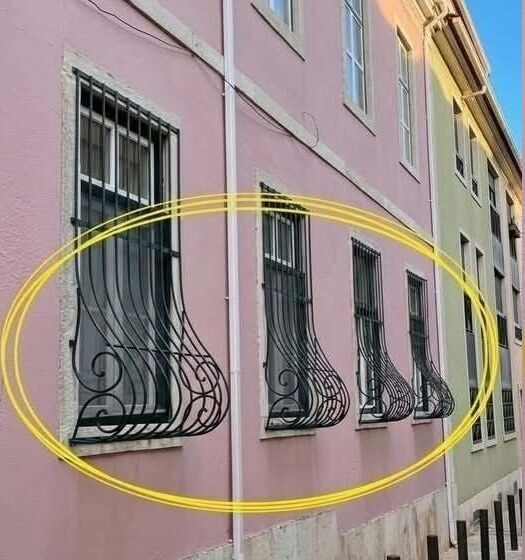
If you’ve ever noticed window bars curving outward like a potbelly, you weren’t just seeing a quirky design—those “potbellied” bars have a practical purpose that dates back centuries.
Discover more
Dairy & Eggs
Food
Cheese
Let’s explore why some window grills bulge outward and what they’re really for.
The Simple Answer: Function Meets Design
Those curved window bars serve two main purposes:
To keep walls clean – The curve directs rainwater away from the window frame, preventing rot and water damage
To create extra space – That outward bulge provides room for flower pots, small items, or just a little breathing room
But there’s more to the story.
The Practical Purpose: Water Management
Discover more
Snacks
Eggs
Flora & Fauna
Before modern building materials and sealants, rainwater would run down window panes and collect at the bottom edge. If the bars were straight and flush against the glass, water would pool there, eventually seeping into the window frame and causing rot, mold, and structural damage.
The curved design serves two purposes:
It directs water away from the frame. The curve acts like a tiny gutter, channeling water toward the edges where it can drip off harmlessly.
It creates an air gap. By curving outward, the bar doesn’t sit flush against the glass, allowing air to circulate and helping the window sill dry faster.
This simple innovation protected wooden window frames for centuries before modern weatherproofing existed.
The Historical Answer: Protection Against Intruders
In older buildings, especially in Europe, window bars were designed with curves at the bottom to prevent intruders from using ropes or hooks to climb up.
Think about it: straight horizontal bars are essentially a ladder waiting to happen. A thief could loop a rope around them or use a grappling hook to climb. But curved bars, especially those that bend outward, make this much more difficult. The curve disrupts the straight line, making it harder to get a secure grip or attachment.
The “Potbelly” Effect: Creating Extra Space
Originally, window bars were installed to keep homes secure while allowing airflow. Over time, people found that by curving the bars outward, they could also create a bit of extra space—a kind of mini-balcony behind the safety of iron.
This extra space became incredibly practical for:
Flower pots – Creating a small garden space at the window
Discover more
Eggs
Dairy & Eggs
Food
Drying herbs or small items – Using the airflow while keeping items secureBarbecues & Grills
Air circulation – Allowing windows to be open wider while still protected
A little breathing room – In tight urban spaces, that few inches of extra space mattered
Regional Variations
The style and purpose of curved window bars varies by region:
Europe
In older European cities, especially in France, Italy, and Spain, you’ll see curved bars on ground-floor windows of historic buildings. They served both security and water-drainage purposes.
Southern United States
Discover more
Cheese
Snacks
Flora & Fauna
In New Orleans and other Southern cities with French and Spanish colonial influence, curved window bars are common on historic homes. Here, they also helped with ventilation—allowing windows to stay open while still providing security.
Industrial Buildings
Some factories and warehouses used curved bars to allow for airflow while preventing access. The curve made it harder to reach through the bars.
Modern Uses
Today, curved window bars are mostly decorative—a nod to historical styles in new construction. Modern windows are better sealed and less vulnerable to water damage, and security systems have evolved.
But you’ll still see them:
On historic renovations trying to preserve original character
Discover more
Baked Goods
Gardening
Grills
In upscale neighborhoods where architectural detail matters
On buildings designed in historical revival styles
In some Mediterranean and Spanish Colonial architecture
Other Interesting Window Bar Facts
Ornamental ironwork in cities like New Orleans and Charleston features elaborate curves and patterns that are both beautiful and functional.Doors & Windows
Bent bars were often forged by hand, making each one slightly unique—a mark of craftsmanship.
In some cultures, the curve was said to symbolize protection, like a pair of open arms embracing the home.