Subtitle: The strange discovery that almost ruined breakfast—and what I learned about the eggs I’ve been eating my whole life.
I was standing in my kitchen this morning, preparing a simple breakfast, when something unusual caught my attention.
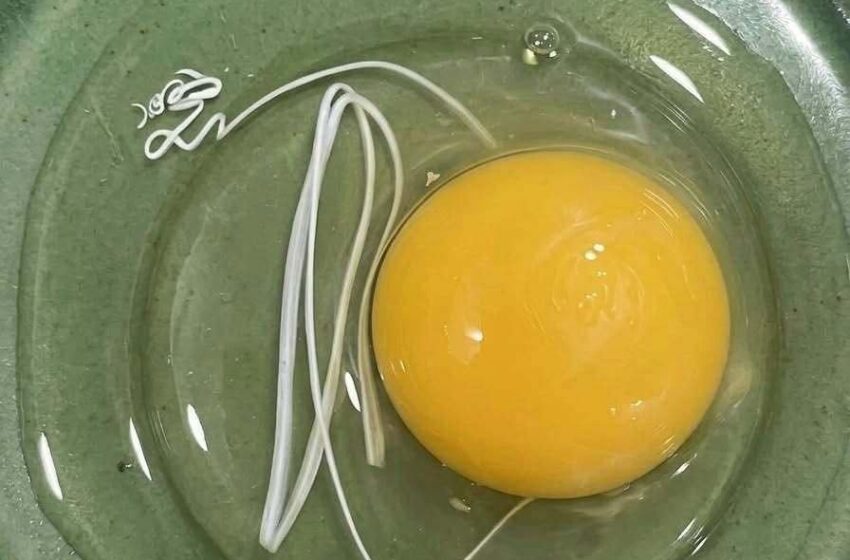
As I cracked an egg into a bowl, I noticed a strange white strand floating through the egg white. It was thin, slightly twisted, and looked almost like a tiny piece of string or a worm. My stomach immediately tightened. I froze, spatula in hand, and stared at the bowl like it contained something dangerous.
I do that thing that everyone does when they’re scared about food: I immediately assume the worst. Is it a parasite? A worm? Some kind of contamination? I thought about the salmonella warnings, the recalls, the things I’d read online about food safety. I could feel my appetite slipping away.
I almost threw the whole thing out. I was this close to trashing the bowl, the egg, and the entire idea of breakfast.
But something stopped me. Maybe it was my natural curiosity. Maybe it was the fact that I’d already poured my coffee and I wasn’t ready to give up. I pulled out my phone and started researching.
Twenty minutes later, I was laughing at myself.
Because that white string—the one I thought might be a parasite or a contamination—is completely natural. It’s not dangerous. It’s not a worm. And I’d been eating it my entire life without ever noticing it before.
Let me tell you what it actually is, why it’s there, and why you should stop worrying about it immediately.
What Is That White String in Your Egg?
That white, twisty, slightly opaque strand is called the chalaza (pronounced kuh-LAY-zuh). Plural: chalazae.
It’s a natural protein structure that holds the yolk in the center of the egg. Think of it as an internal suspension system—a set of tiny ropes that anchor the yolk to the membrane of the eggshell. It keeps the yolk from bouncing around and rupturing.
The chalazae are made of the same protein (keratin) as egg white. They are completely edible, completely safe, and actually a sign of a fresh, high-quality egg.
In fresh eggs, the chalazae are thick and prominent. As eggs age, the chalazae dissolve and become less visible. So if you see a prominent white strand in your egg, congratulations—you’re eating a fresh egg.
The word “chalaza” comes from the Greek word for “hailstone,” referring to the way the strand looks like a small, white pebble suspended in the white.
Why You Probably Never Noticed It Before
If this was the first time you noticed a chalaza, you’re not alone. Many people never notice them because:
They crack eggs into a hot pan. When you crack an egg directly into a hot frying pan, the egg white cooks quickly and the chalaza can be hidden in the opaque white.
They scramble or bake their eggs. Scrambling or baking eggs mixes everything together, making the chalaza invisible.
They buy older eggs. Older eggs have thinner, less visible chalazae. Commercial eggs might be several weeks old by the time they reach your grocery store.
They don’t look closely. Most people don’t examine their eggs before cooking. They crack, cook, and eat without scrutinizing.
The only reason I noticed mine was because I cracked the egg into a clear glass bowl and looked at it before cooking. And even then, it took me a minute to realize what I was seeing.
Is the Chalaza Safe to Eat?
Yes. Absolutely.
The chalaza is made of protein, just like the egg white. It’s completely safe, completely edible, and contains nothing harmful.
Some people remove the chalaza for aesthetic reasons (if they’re making something that requires a perfectly smooth egg white, like certain desserts or meringues). But you can leave it in without any issues. It won’t change the taste, texture, or nutritional value of your egg.
In fact, if you’re the kind of person who worries about nutrition, the chalaza is pure protein. That’s a good thing.
Other Strange Things You Might Find in Eggs
The chalaza is the most common “weird” thing in an egg, but it’s not the only one. Here are some other things you might spot and wonder about.
Blood spots (also called meat spots). These are small red or brown specks that appear in the egg yolk or white. They occur when a small blood vessel bursts during the egg’s formation. They are completely safe to eat. If they bother you, you can remove them with the tip of a knife.
Cloudy egg white. A cloudy egg white is a sign of a very fresh egg. The carbon dioxide hasn’t had time to escape through the shell membrane. As the egg ages, the white becomes clearer.
Double yolks. This happens when a hen releases two yolks at once, or when a single yolk divides. Double-yolk eggs are completely safe and considered lucky in some cultures.
Greenish or dark eggs. This is not a sign of spoilage. It’s often due to the hen’s diet or the presence of a rare pigment called oocyanin. The eggs are safe to eat.
A ring around the yolk after hard-boiling. This happens when eggs are overcooked. The greenish-gray ring is a chemical reaction between the iron in the yolk and the sulfur in the egg white. It’s harmless but not very attractive.
What About Parasites in Eggs?
This is a common fear, and it’s understandable. The idea of eating something that might contain a parasite is genuinely unsettling.
Here’s the good news: eggs are remarkably safe.
The USDA and the FDA strictly regulate commercial eggs in the United States. All commercial eggs are washed, graded, and inspected. Parasites in eggs are extremely rare.
In the extremely unlikely event that a parasite were present, it would be killed by cooking. Eggs should always be cooked until both the white and the yolk are firm—not runny. This kills any potential bacteria and parasites.
The chalaza is not a parasite. It’s not a worm. It’s a structural protein. You can eat it without worry.
A Quick Word on Food Anxiety
I’m going to be honest here.
I have a tendency to overthink food. I see something strange, my brain goes to the worst-case scenario, and I spend twenty minutes spiraling instead of just eating my breakfast. It’s a habit I’m trying to break.
The chalaza is a perfect example. I saw a white string and immediately thought “danger.” I didn’t stop to think about the fact that eggs are one of the most studied, tested, and regulated foods in the world. I didn’t consider that maybe—just maybe—the thing I was looking at had a perfectly normal explanation.
If you’re like me, I want you to know this: most things in your food are not dangerous. Most surprises have a simple, harmless explanation. The chalaza is one of them.
Frequently Asked Questions
What is the white string in an egg?
It’s the chalaza—a protein structure that holds the yolk in the center of the egg. It’s completely safe and natural.
Why do some eggs have a more visible chalaza than others?
Fresh eggs have thick, prominent chalazae. As eggs age, the chalazae dissolve and become less visible.
Is the chalaza a sign of a fertilized egg?
No. The chalaza is present in both fertilized and unfertilized eggs. It has nothing to do with fertilization.
Can I eat the chalaza?
Yes. It is edible, safe, and nutritious. You can leave it in or remove it, depending on your preference.
How do I remove the chalaza?
If you want to remove it, simply scoop it out with your finger, a spoon, or the tip of a knife. It’s not necessary, but you can do it.
Should I be worried if I see a white string in my egg?
No. It’s completely normal, especially in fresh eggs. You don’t need to worry.
Can the chalaza cause health problems?
No. It’s just protein.
A Final, Humble Thought
I almost threw out a perfectly good egg this morning. I almost wasted breakfast, and I almost spent the rest of the day worrying about something that was never a problem in the first place.
But instead, I researched. I learned. And now I know something I didn’t know before.
That’s the thing about cooking—and about life, honestly. We’re always going to encounter things that surprise us. Things that look strange. Things that don’t seem quite right. And our first instinct is often to panic, to assume the worst, to throw it away and move on.
But sometimes, the strange thing is actually completely normal. Sometimes the thing that looks like a problem is actually a sign of quality. Sometimes the white string in your egg is just a chalaza, and your breakfast is going to be fine.
So next time you crack open an egg and see a mysterious white strand, don’t panic. Don’t throw it away. Just remember: it’s a chalaza. It’s natural. It’s safe.
And it’s proof that you’re eating a fresh, high-quality egg.
Now eat your breakfast.
Have you ever found something strange in your food and panicked? What was it, and how did you discover the truth? Share your stories in the comments—I promise I won’t judge your egg anxiety. 🥚