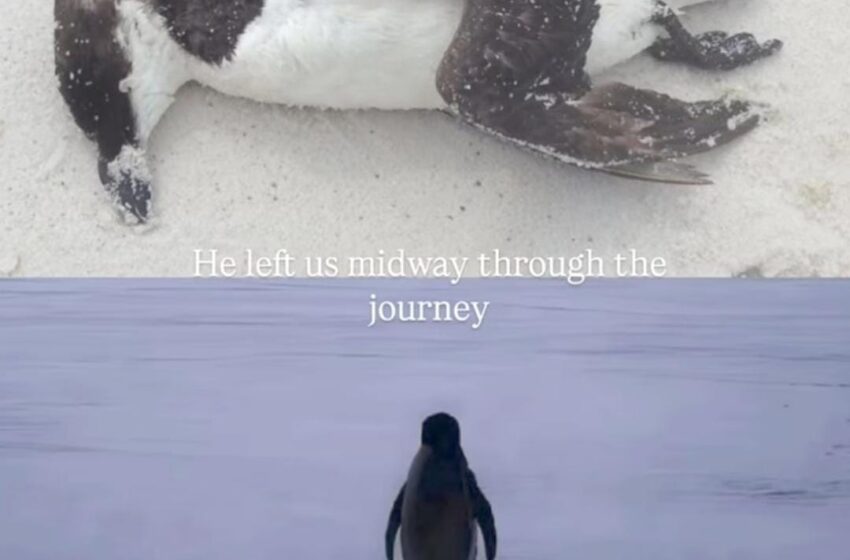
Sometimes the internet doesn’t just create memes — it creates symbols. In early 2026, one short clip of a penguin walking alone across Antarctica turned into a global obsession. People didn’t see “just a penguin”… they saw the mood of an entire generation. The lonely march, the silence, the icy emptiness — it looked like the definition of burnout, overthinking, and emotional exhaustion. That’s why the viral character was quickly named the Nihilist Penguin, and why so many users described it as a depressed penguin walking away from life itself.
Why Is the ‘Nihilist Penguin’ Going Viral?
In early 2026, a simple clip of a penguin walking alone across the frozen Antarctic interior became one of the internet’s biggest sensations of the year. Dubbed the “Nihilist Penguin,” this image of a solitary bird striding inland — instead of toward the sea and its colony — suddenly filled social media timelines with memes, jokes, existential captions, and philosophical interpretations.
Millions online began sharing the clip with phrases like “heading toward oblivion,” “mood,” and even calling it a “depressed penguin” — not because scientists confirmed any emotional state, but because the scene’s emptiness and simplicity resonated deeply with human feelings of burnout, isolation, or meaninglessness.
Why Is the ‘Nihilist Penguin’ Going Viral?
The clip moving through icy barrens hit the internet at a moment when many people felt overwhelmed or disconnected. Social platforms turned the penguin’s lonely walk into a metaphor — a visual mood board for when life feels purposeless or exhausting. Provocative captions and creative remixes turned the footage into a cultural symbol, not just an animal video.
This popularity reflects how digital culture often reshapes natural phenomena into emotional or philosophical commentary. The internet didn’t just see a bird — it projected meaning onto it. Some users even humorously describe it as the ultimate symbol of modern angst and quiet resignation, using the penguin as a stand-in for how they feel on a tough day.
Werner Herzog’s Cinematic Twist: A Deranged Penguin in the Frozen Wasteland
The moment didn’t originate online — it comes from the 2007 documentary Encounters at the End of the World directed by Werner Herzog. In the film, Herzog and his team observe an Adélie penguin that inexplicably breaks away from its colony and begins walking inland toward vast, icy mountains — a direction that offers no food, shelter, or company.
Herzog frames the moment as haunting and surreal. Viewers recall his narration casting the bird’s journey not simply as migration but as a kind of “death march” — a phrase that adds dramatic weight to the footage. That narrative style makes the image feel rich with meaning: a solitary creature stepping away from life as it’s known into a barren, endless horizon.
Online, this interpretation fuels the “Nihilist Penguin” label — some see the penguin not just as lost but as a deranged figure rejecting instinctual behavior, even though the science doesn’t actually support that emotional reading.
What Does Science Actually Say About the Penguin’s Behaviour?
Scientists caution against reading human emotions into animal actions. The behavior shown in the viral clip is unusual but not evidence of existential despair or emotional breakdown in the bird. Adélie penguins normally stay near the sea and their colony, where food, warmth, and social activity are found.
Researchers offer biological explanations that make sense in the context of animal behavior:
- Disorientation or navigational error: Penguins may stray from familiar routes, especially when environmental cues fail.
- Stress or confusion: Penguins can behave unpredictably during breeding season or when stressed by weather or social factors.
- Individual variation: Some animals behave atypically without that behavior having deep meaning.
Importantly, scientists emphasize that unusual behavior does not imply consciousness or emotional despair in animals the way humans experience sadness or nihilism. The viral narrative of a “depressed penguin” is an internet invention born out of human storytelling, not biological evidence.
Why Human Psychology Grabs Onto the Tale
Humans are meaning hunters. We look for stories and emotions even in silent moments — especially when something feels ambiguous or striking. Psychology offers some insight into why the image of the wandering penguin resonates so strongly.
One lens for understanding this is Freudian psychology, especially the tension between Eros (life drive) and Thanatos (death drive). While Freud’s theory was about humans—not penguins—it helps explain why people emotionally connect to images that look like withdrawal, surrender, or walking away from survival.
So when people watch the penguin walk toward nothingness, they don’t just see an animal—they see a metaphor: a creature moving away from meaning, away from struggle, and away from the noise of life.
The Meme vs. Reality: Why It Matters
The Nihilist Penguin is a perfect example of how meme culture transforms a natural moment into emotional symbolism. The clip didn’t change — people’s interpretations did. What was once a strange animal detour became a cultural icon for burnout, existential dread, and modern overthinking.
But the real lesson is simple: animals don’t live in philosophy, humans do. And sometimes, we use nature as a mirror—especially when we’re tired.
In Summary
- Why is the ‘Nihilist Penguin’ going viral?
Because people projected their emotions and existential thoughts onto a striking clip of a penguin walking alone. - What does science say about the penguin’s behaviour?
Science points to disorientation, stress, or rare abnormal movement — not “nihilism” or depression. - Is it really a depressed penguin?
Not literally. The depressed penguin idea is a human interpretation — but that’s exactly why the meme is so relatable.