Introduction
Every family has its silences—the topics that are never broached and the drawers that are never opened. In our house, that silence lived in a small, locked box in my father’s office. For years, my mother and I respected the boundary, ignoring his sudden absences and the way his face would drain of color when he retreated into his private “rituals.”
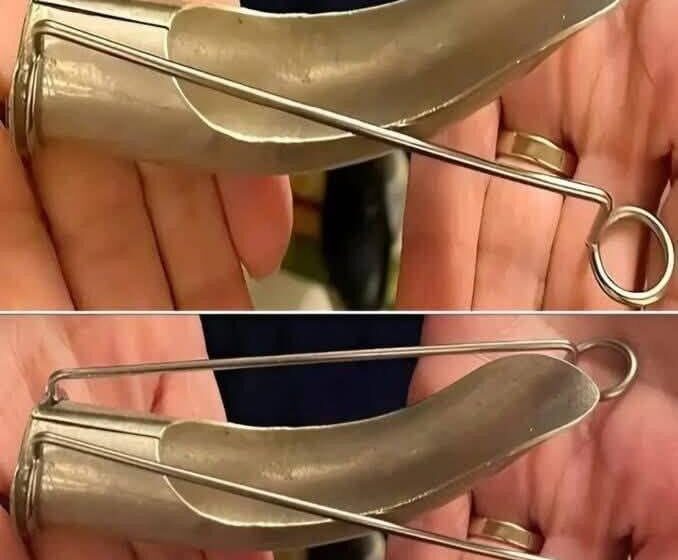
But curiosity eventually outweighed the quiet fear we had lived with for decades. When my mother finally opened that forbidden drawer, she didn’t find paperwork or hidden money. Instead, she pulled out an object so unusual and intricately crafted that it defied explanation. It wasn’t a tool, and it wasn’t an ornament. It was something else—something that felt as though it carried the weight of a memory we weren’t supposed to have.
Why This Discovery Unsettled Us
- 🕵️ Hidden in Plain Sight: A “secret” kept in a common household drawer for years.
- 🌀 Unusual Geometry: The object stood nearly a foot tall, etched with deliberate, repeating patterns.
- 🐜 Biomorphic Design: It featured thin, articulated projections—like antennae or jointed limbs.
- 🧠 Sensory Trigger: To touch it was to feel a “buzzing” sensation, as if stirring a forgotten memory.
- 🤐 The Family Bond: A shared realization between mother and child that some secrets change you just by being seen.
The “Ingredients” of a Family Mystery
- The Locked Box: The physical barrier between the known and the unknown.
- The Strange Object: A foot-tall, patterned artifact with articulated “limbs.”
- The Emotional Weight: The palpable shift in the room’s energy when the object was revealed.
- The Silent Witness: My mother’s intuition that this object defined my father’s “other” life.
Instructions / Method: How to Handle a “Found” Mystery
- The Discovery: It often happens by accident—looking for a utility bill or a birth certificate—when a “hidden” layer of the home is revealed.
- The Assessment: Don’t rush to judgment. Observe the craftsmanship. Is it handmade? Is it a vintage tool? Or is it something more personal, like a “memory keeper”?
- The Sensory Connection: Note how the object feels. In our case, the smooth surface and unsettling precision of the “limbs” suggested something more than a mere trinket.
- The Silent Dialogue: Share the discovery with a trusted family member. Sometimes, looking at a mystery through someone else’s eyes confirms the “weight” of what you’ve found.
- The Decision: Do you confront the owner? Or, as we did, do you return it to the drawer, knowing that some things, once seen, can never be “unseen”?
Is It “Healthy” to Keep Secrets?
In the world of family dynamics, “Kitchen Secrets” can be protective or destructive. While some secrets are kept to shield loved ones from pain, others—like my father’s mysterious object—act as a drain on the person carrying them. Understanding the history of heirloom objects can be a healthy way to process family trauma or uncover a hidden legacy of craftsmanship.
Calories & Nutrition
Estimated “Emotional Count”:
- Anxiety: High (The “buzzing” sensation of the unknown)
- Curiosity: 100% (The drive to open the locked box)
- Legacy: Deeply rooted (A weight that defines a person’s history)
Tips for Best Results
- Document the Find: If you find something “unusual” in a vintage collection, take a photo. It helps in identifying the object later through communities like ours.
- Look for Maker’s Marks: Check the bottom or the joints for small stamps or signatures that might indicate where the object was made.
- Respect the Boundary: If an object is “hidden,” it’s often for a reason. Tread carefully when bringing a secret into the light.
- Check the Context: Was it wrapped in silk? Placed in a velvet-lined box? The “packaging” tells you as much about the object’s importance as the item itself.
Variations & Common “Drawer Mysteries”
- 🗝️ Skeleton Keys: Often found in old drawers, representing doors that no longer exist.
- 📷 Unlabeled Photos: Faces that look like yours but have no names.
- 🛠️ Antique Specialized Tools: From watchmaking gears to strange medical instruments that look like “antennae.”
- 📜 Coded Letters: Often written in shorthand or languages the current generation no longer speaks.
FAQ (Frequently Asked Questions)
What should I do if I find a strange object in an elder’s drawer? Approach with curiosity rather than accusation. Many “unusual” items are simply obsolete tools or sentimental mementos from a different era.
Why did it feel like a “memory”? Psychologists suggest “genetic memory” or “collective family trauma” can make us feel an emotional resonance with objects that were significant to our ancestors.
Can some objects be “haunted”? In the world of vintage collecting, we call this “residual energy”—the feeling that an object is “charged” by the intense emotions of its owner.
You May Also Like
- “Doctors Reveal Potatoes Cause…” — The Truth About This Misunderstood Superfood
- Easy Guide: Does Visible Veins Mean Poor Circulation? (Healthy Tips & Meal Prep Ideas!)
- If Your Hip Hurts, It’s a Clear Sign That Something May Be Wrong
- What the Air Recirculation Button Means for Your Driving Experience
Final Thoughts
The “Mystery in the Drawer” is a reminder that we never truly know the full story of the people we love. My father’s object remains locked away, but its image stays with us—a silent, patterned limb of a past we are still trying to understand. If you’ve found something “unsettling” in your family home, remember: it’s not just an object; it’s a piece of the puzzle that makes you who you are. 🗝️🌀🤐