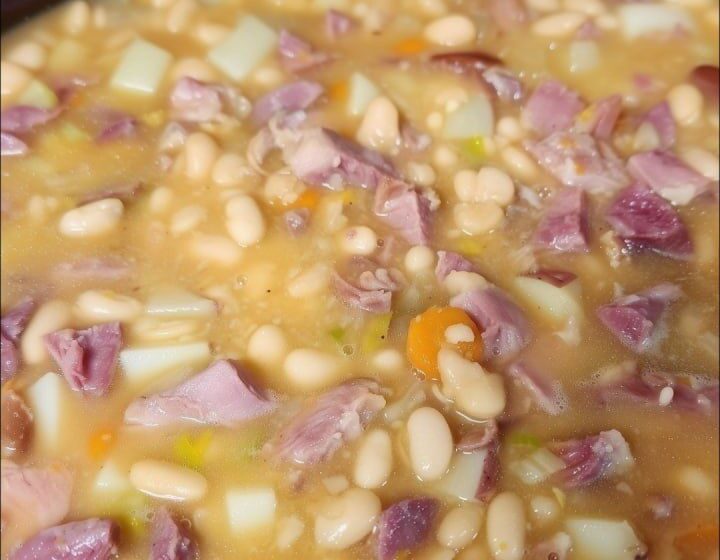
There is a profound, almost magical transformation that happens when you combine tough, dried legumes with a smoked, bone-in cut of meat and subject them to low, consistent heat over several hours. If you appreciate the mechanics of cooking and want to understand exactly why certain traditional meals taste so incredibly comforting, this Crockpot Navy Bean and Ham Soup is a masterclass in slow-extraction cooking.
This recipe takes a handful of humble, inexpensive ingredients and utilizes the prolonged thermal environment of a slow cooker to create a masterpiece of flavor and texture. The navy beans act as tiny culinary sponges, soaking up the savory goodness of the ham, while the aromatic vegetables break down to form a deeply complex flavor base.
Whether you are looking for a reliable, hands-off meal prep solution or a deeply satisfying high protein meal for a chilly evening, this soup delivers on every single front. Let’s head into the kitchen, break down the food science, and master this rich, smoky classic!
Why the Science Behind This Recipe Works
- Collagen to Gelatin Conversion: The true secret to this soup’s lip-smacking, velvety texture is the smoked ham bone. As it simmers low and slow, the tough connective tissues and collagen in the bone gently melt into gelatin, giving the broth an incredibly rich mouthfeel that you simply cannot get from a carton of store-bought stock.
- The Aromatic Foundation: The specific ratio of onions, celery, and carrots (known in classic French culinary terms as a mirepoix) provides a crucial baseline of sweetness and earthiness that perfectly balances the heavy, aggressive smoke of the ham.
- Natural Starch Thickening: Navy beans are dense with complex carbohydrates. As they cook, the exterior skins soften and allow the starches inside to naturally leach into the cooking liquid, thickening the water into a robust, hearty soup without the need for flour or cornstarch.
- Effortless Execution: The slow cooker maintains a consistent, gentle simmering temperature (around 200°F to 209°F on the LOW setting). This prevents the beans from violently boiling and blowing apart, ensuring they become creamy on the inside while maintaining their structural integrity.
The Ingredient Formula
Here are the exact measurements you will need to execute this test-kitchen-quality soup:
- 1 lb dry navy beans, washed and any bad beans/debris removed
- 1 large smoked ham bone (with some meat still attached)
- 1 large onion, finely chopped
- 2 stalks celery, chopped
- ¾ cup carrots, chopped
- 2 tablespoons minced garlic
- ½ teaspoon black pepper
- 2 whole bay leaves
- 4–5 cups water (or low-sodium chicken broth for even more depth)
Technique & Execution
- The Sort and Wash: Rinse the dried navy beans thoroughly in a colander under cold water. Pick through them carefully to remove any shriveled beans or small pebbles that often sneak into agricultural products.
- Assemble the Slow Cooker: Add the sorted navy beans, smoked ham bone, chopped onion, celery, carrots, minced garlic, black pepper, and bay leaves to the base of your crockpot.
- Add the Liquid: Pour in the 4 to 5 cups of water. Stir gently to combine the ingredients and ensure the beans are fully submerged. (Note: Do not add any extra salt at this stage! The smoked ham bone contains a significant amount of sodium, which will extract into the broth over time.)
- The Slow Extraction: Cover the crockpot and cook on LOW heat for 6–8 hours. You are looking for the beans to become creamy and tender, and for the broth to take on a rich, opaque appearance.
- Shred the Meat: Carefully remove the hot ham bone from the crockpot and place it on a cutting board. Using two forks, shred any tender meat from the bone. Discard the bare bone and any excess gristle or fat.
- Final Assembly: Return the shredded ham to the crockpot and stir it into the beans. Locate and remove the 2 bay leaves (they have already deposited their essential oils and are too tough to eat).
- Taste and Adjust: Taste the broth carefully. Adjust the seasoning with additional salt and pepper only if needed. Serve piping hot!
Caloric Breakdown & Macros
Because dried beans expand significantly and absorb the cooking liquid, this recipe yields a massive amount of highly nutritious, satiating food—making it an incredibly cost-effective meal prep staple!
Assuming this recipe yields 6 hearty servings, one bowl contains approximately 320 to 350 calories. You receive a fantastic 22g to 25g of protein from the combination of the legumes and the ham. The navy beans provide roughly 45g of complex carbohydrates and a massive 15g of dietary fiber, which promotes excellent digestive health and ensures steady, long-lasting energy. The fat content remains relatively low (around 4g to 6g), making this a spectacularly balanced, macro-friendly meal.
Expert Culinary Tips for Flawless Results
To elevate this humble soup into a flawless, gourmet experience, utilize these professional kitchen techniques:
- The Acid Hack: After 8 hours of slow cooking, the flavor profile of the soup will be very heavy, savory, and smoky. To “wake up” the flavors right before serving, stir in 1 to 2 teaspoons of apple cider vinegar or a squeeze of fresh lemon juice. The subtle acidity cuts through the richness and brightens the entire dish dramatically!
- The “Old Bean” Problem: If you cook your soup for 8 hours and your beans are still crunchy, your dried beans were likely too old. Legumes that have been sitting in a pantry for two years undergo structural changes that make them nearly impossible to soften. Always buy your dried beans from a store with high product turnover.
- Creamier Texture: If you prefer a thicker, creamier soup base, remove two ladles of the cooked beans and broth at the very end of the cooking time, blend them until smooth in a blender (or use an immersion blender directly in the pot for a few seconds), and stir the puree back into the soup.
- Hold the Salt: Hard water (water with high calcium and magnesium content) and high-sodium environments can strengthen the pectin in the bean skins, preventing them from softening. Let the ham bone do the heavy lifting, and only add extra salt at the very end of the cooking process!
Variations & Upgrades
This highly adaptable recipe provides a fantastic canvas for your kitchen experiments! Try these test-kitchen approved variations:
- Add Leafy Greens: For a massive boost of vitamins and color, stir in 3 cups of roughly chopped kale or fresh baby spinach during the last 20 minutes of cooking. The greens will wilt perfectly into the hot broth.
- The Creole Spin: Swap the standard black pepper for a tablespoon of Cajun or Creole seasoning, and add a diced green bell pepper to your mirepoix for a distinct Louisiana flavor profile.
- Sausage Swap: If you cannot find a smoked ham bone, you can achieve a similar smoky, savory depth by slicing 1 pound of high-quality smoked Andouille or Kielbasa sausage and searing it in a skillet before adding it to the slow cooker.
FAQ Section
Do I need to soak the navy beans overnight first? When utilizing a slow cooker for 6 to 8 hours on LOW, pre-soaking the beans is not strictly scientifically necessary—the prolonged cooking time is sufficient to hydrate and tenderize them. However, if you know you have a sensitive digestive system, soaking the beans overnight and discarding the soaking water can help remove some of the indigestible complex sugars (oligosaccharides) that cause bloating.
Can I make this on the stovetop instead? Absolutely. Follow the exact same preparation steps, but place the ingredients in a large, heavy-bottomed Dutch oven. Bring to a boil, then reduce the heat to a gentle simmer, cover, and cook for 2 to 2.5 hours, stirring occasionally and adding more water if the soup gets too thick.
How long does this soup last in the fridge? Because the starches in the beans continue to absorb liquid and thicken as they cool, this soup actually tastes significantly better on the second and third day! Store it in an airtight container in the refrigerator for up to 5 days.
Can I freeze Navy Bean and Ham Soup? Yes, this soup freezes exceptionally well. Let it cool completely to room temperature, then transfer it to freezer-safe bags or containers. It will maintain its quality for up to 3 months. Thaw overnight in the refrigerator and reheat gently on the stove, adding a splash of water or chicken broth to loosen the texture.