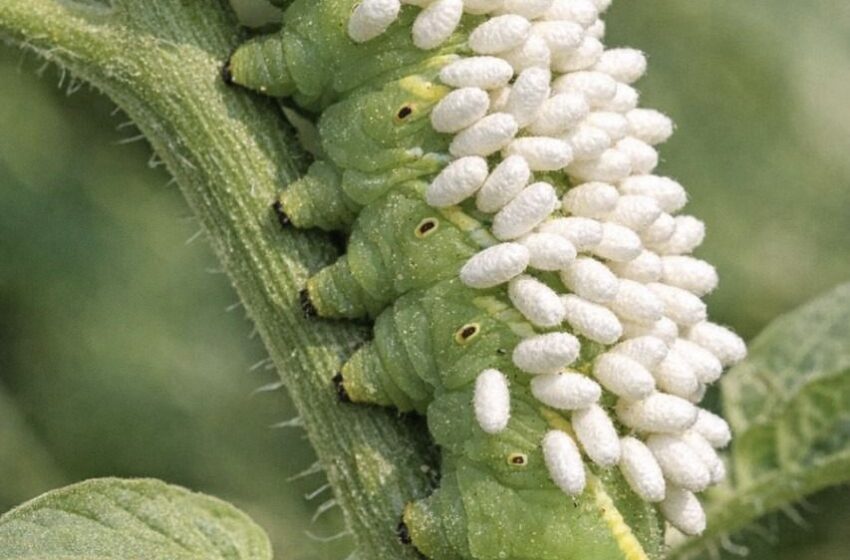
Spotted this large green caterpillar on my plants covered in white standing things. Is it a fungus or eggs? Should I remove it?
As a gardener, encountering unexpected visitors in your garden is a common occurrence. Among these, the sight of a large green caterpillar covered in mysterious white structures can be both fascinating and alarming. These unusual guests often prompt questions about their identity and the potential impact on your beloved plants.
Understanding the nature of these caterpillars and the mysterious white formations they carry is crucial. Are they a threat to your garden, or could they be part of a beneficial cycle that aids in natural pest control? In this article, we delve into the enigma of these caterpillars, offering clarity on whether to intervene or let nature take its course.
- What You’re Seeing: A Tomato Hornworm Covered in White Cocoons
The large green caterpillar you’ve spotted is likely the tomato hornworm, a common pest in many gardens. Measuring up to 4 inches in length, these caterpillars are known for their voracious appetite for tomato plants and other members of the nightshade family. Their bright green color and distinctive white stripes running along their sides make them relatively easy to identify.
What sets this particular caterpillar apart is the presence of small, white, rice-like cocoons attached to its back. These structures are not part of the caterpillar itself but are evidence of a fascinating parasitic relationship, which we will explore further. - Fungus or Eggs? Identifying Those Strange White Structures
The white structures on the caterpillar are not a fungus or eggs but rather the cocoons of Braconid wasps. These wasps lay their eggs on the caterpillars, and once the larvae hatch, they feed on the hornworm from the inside out. As they mature, the larvae exit the caterpillar’s body and spin these tiny white cocoons, which are typically about 1/8 inch long.
These cocoons are a clear indicator that the wasp larvae are in the pupal stage, preparing to emerge as adult wasps. The presence of these cocoons means that the caterpillar is already weakened and unlikely to survive for much longer, which can be beneficial for your garden. - Meet the Braconid Wasp: The Tiny Ally Riding Your Caterpillar
Braconid wasps are tiny, often less than 1/4 inch in length, yet they play a significant role in controlling pest populations naturally. These wasps are parasitoids, meaning their larvae develop inside or on the body of a host insect, ultimately killing it. The hornworm caterpillar serves as an ideal host for these wasps.
Upon hatching, the wasp larvae feed on the caterpillar’s internal tissues, avoiding vital organs to keep the host alive until they are ready to pupate. This strategic parasitism ensures the survival of the wasp larvae while simultaneously controlling the hornworm population. - Why You Should Usually Leave This Caterpillar Right Where It Is
While it might be tempting to remove the caterpillar immediately upon spotting it, doing so could disrupt a beneficial process. The parasitized hornworm is already weakened and will not cause significant damage to your plants. Additionally, by allowing the wasp larvae to complete their development, you are fostering a natural pest control mechanism in your garden.
Once the wasps emerge from their cocoons, they will seek out other hornworms to parasitize, helping to keep the population of these plant-eating pests in check. This natural balance is an excellent example of how biodiversity in your garden can work to your advantage. - How These Parasitic Wasps Protect Your Tomatoes and Other Plants
Braconid wasps play a crucial role in the garden ecosystem by controlling pest populations. Their presence can significantly reduce the number of hornworms and other caterpillars that feed on your plants, thereby minimizing damage. This form of biological control is sustainable and environmentally friendly, reducing the need for chemical pesticides.
By conserving these beneficial insects, you support a healthier garden environment. The wasps’ activity encourages a more diverse ecosystem where natural predators keep pest populations in balance, ultimately leading to healthier plants and more bountiful harvests. - When (If Ever) You Should Remove a Parasitized Hornworm
In most cases, it is best to leave a parasitized hornworm in place, allowing the wasps to mature and emerge. However, there are situations where removal might be necessary, such as if the caterpillar is located on a plant that is already heavily damaged or if it poses a risk to other plants nearby.
Even in such cases, consider relocating the caterpillar to an area of your garden where it can complete its life cycle without causing further harm. This approach maintains the natural pest control benefits while protecting your plants. - What To Do If the Caterpillar Has No White Cocoons Yet
If you find a tomato hornworm without any white cocoons, it has not yet been parasitized by Braconid wasps. In this situation, you have a few options. You can manually remove the caterpillar and relocate it away from your garden, or you can allow it to remain, hoping that wasps will find and parasitize it soon.
To actively encourage wasp presence, avoid using broad-spectrum insecticides that can harm beneficial insects. Planting flowers that attract wasps, such as dill, fennel, and parsley, can also help draw them to your garden.