If your whites are looking gray, your towels feel stiff as cardboard, or your clothes come out of the wash smelling musty despite using detergent, you’re not alone. And before you reach for expensive fabric softeners, bleach boosters, or “miracle” laundry pods—stop.
The solution might already be sitting in your pantry: distilled white vinegar.
Yes, that humble bottle of vinegar isn’t just for salad dressing or cleaning countertops. When used correctly in the laundry, it acts as a natural fabric softener, odor neutralizer, detergent booster, and whitening agent—all without harsh chemicals, synthetic fragrances, or hidden toxins.
But here’s the catch: most people use vinegar wrong—and end up wasting it, damaging fabrics, or wondering why it “doesn’t work.”
In this guide, you’ll discover:
✅ Exactly when (and when NOT) to add vinegar to your wash
✅ How to restore dingy whites and revive stiff towels
✅ The #1 mistake 90% of people make with vinegar in laundry
✅ Pro tips to extend the life of your clothes and washing machine
Let’s unlock the full laundry power of vinegar—the right way.
❌ The Big Mistake Everyone Makes (And How to Avoid It)
Myth: “Just pour vinegar into the detergent dispenser or dump it on clothes at the start of the wash.”
Reality: This drastically reduces its effectiveness—and can even set stains or damage fibers.
🚫 Why It’s Wrong:
Vinegar is acidic (pH ~2.5), while most detergents are alkaline (pH 9–10).
When mixed directly, they neutralize each other, canceling out cleaning power.
Pouring vinegar on fabrics at the beginning can lock in odors or stains before they’re fully lifted.
✅ The Right Way:
Add vinegar ONLY during the rinse cycle—never with detergent.
This ensures:
Detergent fully breaks down dirt and oils first
Vinegar then softens fibers, removes residue, and neutralizes odors without interference
✅ How to Use Vinegar in Laundry: Step-by-Step Guide
For Whiter Whites
Wash as usual with your regular detergent (add oxygen bleach like OxiClean for extra whitening—never mix with vinegar!).
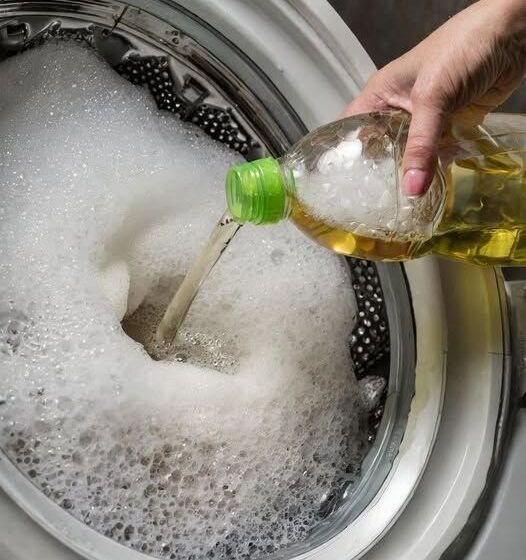
During the final rinse cycle, add ½ to 1 cup of distilled white vinegar directly to the drum or use the fabric softener dispenser (it’s safe!).
Result: Brighter whites, no gray cast, and zero chemical buildup.
💡 Tip: For yellowed collars or underarms, pre-soak in a mix of 1 cup vinegar + 1 gallon warm water for 30 minutes before washing.
🛁 For Softer, Fluffier Towels
Towels turn stiff because detergent and fabric softener residue coat the fibers, blocking absorbency.
Fix it:
Wash towels without fabric softener (it’s the #1 cause of stiffness!)
Add 1 cup vinegar to the rinse cycle
Dry on low heat—no dryer sheets!
🌟 Bonus: Vinegar helps eliminate mildew smells from damp gym clothes, swimwear, and bath mats.
👕 For All Laundry (General Maintenance)
Add ½ cup vinegar to the rinse cycle weekly to:
Prevent static cling
Reduce lint and pilling
Keep your washing machine fresh and odor-free
Extend the life of elastic and spandex
🚫 When NOT to Use Vinegar in Laundry
While vinegar is a powerhouse, it’s not universal. Avoid it with:
Silk or wool: Acid can damage delicate protein fibers
Elastic-heavy items (like underwear or swimwear): Over time, acidity may weaken elastics (use sparingly)
Stone-washed or acid-washed denim: May alter the finish
When using chlorine bleach: NEVER mix vinegar + bleach—it creates toxic chlorine gas
⚠️ Safety note: Always use distilled white vinegar (5% acidity)—not apple cider or cleaning vinegar (which can stain).
🧼 Vinegar vs. Commercial Products: What’s Better?
Concern
Commercial Fabric Softener
Vinegar
Softens fabrics
✅ (but coats fibers)
✅ (cleans + softens)
Whitens clothes
❌
✅ (removes residue)
Eliminates odors
❌ (masks with perfume)
✅ (neutralizes at source)
Eco-friendly
❌ (plastic, chemicals)
✅ (biodegradable, zero waste)
Cost per load
$0.20–$0.50
$0.03–$0.05
Verdict: Vinegar wins on performance, cost, and safety—when used correctly.
🧺 Pro Tips from Laundry Experts
Clean your machine monthly: Run an empty cycle with 2 cups vinegar on hot to dissolve soap scum and mildew.
Combine with baking soda? Careful! Use baking soda in the wash (boosts detergent), vinegar in the rinse—but never mix them in the same cycle (they fizz and cancel out).
No vinegar smell left behind: The acidic scent completely dissipates when dry—your clothes will smell fresh and clean, not like a salad.
Final Thought: Simplicity, Savings, and Superior Results
You don’t need a closet full of laundry products to get fresh, soft, bright results. One $3 bottle of vinegar can replace fabric softener, odor removers, and whitening boosters—while being gentler on your clothes, your skin, and the planet.
So next time you do laundry, skip the chemical cocktails and try this grandmother-approved hack the right way: rinse cycle only, never with detergent.
Your towels will thank you. Your whites will shine. And your wallet? It’ll stay happily full.
🌿 Cleaner laundry. Simpler routine. Healthier home.
Love natural home hacks? Discover how to clean your oven with steam, whiten yellowed sheets, or make DIY laundry detergent for pennies per load!