ADVERTISEMENT
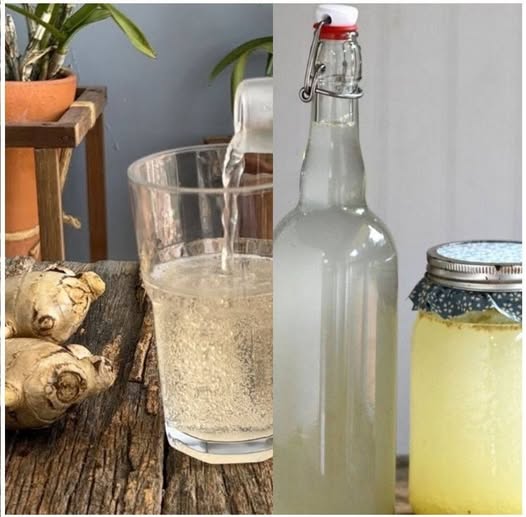
This acts like a sourdough starter, capturing wild yeast from the ginger skin.
Ingredients
- 2 cups filtered or spring water (chlorine-free)
- 1 inch fresh organic ginger, grated or finely chopped (keep skin on for more natural yeast)
- 2 tbsp granulated sugar
Instructions
- Day 1: Mix the water, sugar, and ginger in a glass jar. Stir until sugar is dissolved. Cover with cheesecloth and a rubber band to let it breathe while keeping out dust.
- Days 2–5 (Feeding): Every 24 hours, add 1 tbsp of fresh ginger and 1 tbsp of sugar. Stir well.
- Check for Readiness: Around day 3 to 7, you should see small bubbles forming at the top and hear a light fizz when you stir it. It should smell yeasty and slightly sweet.
Part 2: Brewing the Ginger Beer
Once your bug is active, you can make the final beverage.
Ingredients
- 1/2 cup strained ginger bug liquid
- 2 liters (approx. 8 cups) filtered water
- 150 g (3/4 cup) brown or cane sugar
- 100 g (4-inch piece) fresh ginger, grated
- Juice of 2–3 lemons
Instructions
- Make the Ginger Tea: Bring 500 ml of water, the 100 g of grated ginger, and the sugar to a boil in a pot. Simmer for 10–20 minutes to extract the spice.
- Cool Completely: Remove from heat and stir in the remaining 1.5 liters of cold water. Crucial: You must let this mixture reach room temperature before adding the bug, or the heat will kill your wild yeast.
- Combine: Strain the ginger solids out of your tea. Add the lemon juice and the 1/2 cup of strained liquid from your ginger bug.
- Bottle: Pour the mixture into clean flip-top (Grolsch-style) bottles, leaving at least 2 inches of headspace at the top.
- Secondary Fermentation: Leave bottles at room temperature in a dark place for 2 to 5 days.
- Tip: Gently squeeze plastic bottles or briefly “burp” a glass bottle daily to check carbonation levels and prevent too much pressure from building up.
- Chill: Once it is as fizzy as you like, move it to the refrigerator. This slows down the fermentation and makes it ready to serve.